Suicide Prevention in Construction: Looking Out for Each Other
The underground utility and construction industries are built on teamwork, resilience, and a commitment to getting the job done. But while we spend a great deal of time discussing physical safety, we often spend far less time talking about mental health.
That needs to change.
Recently, WUCA members had the opportunity to participate in VitalCog Training from Bruce Morton. The message was both sobering and hopeful: suicide is a significant challenge within our industry, but it is also preventable.
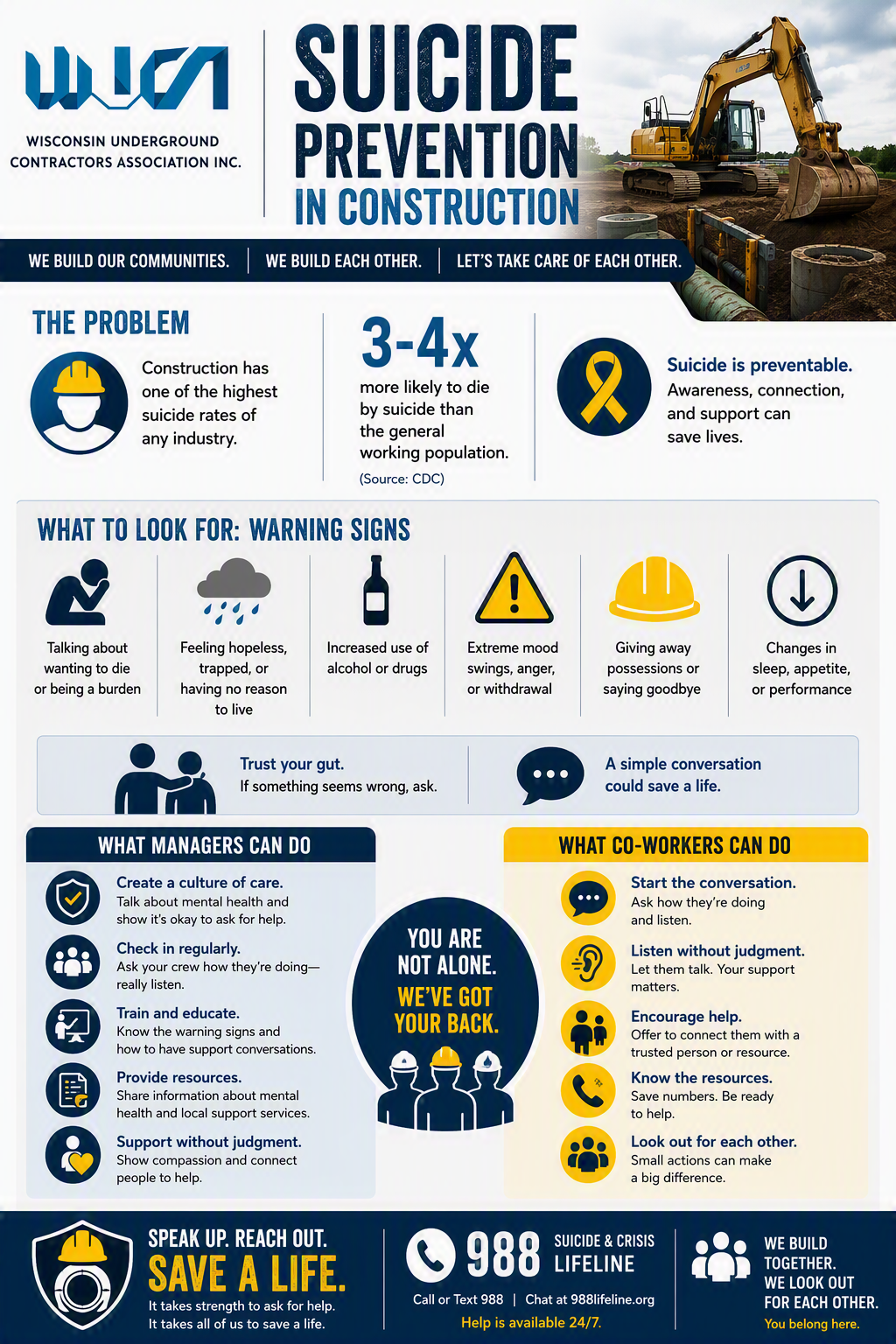
One statistic stood out. Suicides in construction occur at a rate approximately six times higher than work-related fatalities. While our industry has made tremendous progress in reducing physical hazards, the hidden dangers of isolation, depression, anxiety, substance misuse, and hopelessness continue to affect many workers, supervisors, and business owners.
Understanding the Risk
Suicide is rarely caused by a single event. Instead, it often develops from a combination of circumstances and feelings. According to suicide risk models discussed during the presentation, risk factors frequently include:
- Feeling alone or disconnected from others
- Feeling like a burden to family, friends, or coworkers
- A desire to escape emotional pain permanently
- An increased capability for self-harm, often accompanied by reduced fear of death, risk-taking behaviors, or access to lethal means
These feelings can affect anyone, regardless of experience, position, age, or reputation.
Warning Signs to Watch For
One of the most important things we can do is recognize when someone is behaving differently than normal.
Potential warning signs include:
- Talking about wanting to die or expressing hopelessness
- Giving away possessions or "tying up loose ends"
- Having unusually deep conversations that seem like goodbyes
- Significant changes in mood or behavior
- Withdrawal from coworkers, family, or friends
- Increased use of alcohol or drugs
- Changes in personal appearance or self-care
- Sudden changes in work performance
- Taking unusual interest in financial matters, wills, or final arrangements
Trust your instincts. When something feels off, it often is.
Supporting Mental Health Every Day
Preventing suicide starts long before a crisis develops. Small actions can have a significant impact on mental well-being.
1. Practice Active Listening
Many people don't need someone to solve their problems. They need someone who will truly listen.
Put down the phone, eliminate distractions, and focus on understanding what the person is saying. Sometimes the simple act of being heard can make a meaningful difference.
2. Lean on Your Tribe
Healthy relationships are one of the strongest protective factors against suicide.
Invest time in the people who support you and encourage others to do the same. Equally important, look for opportunities to support others. Giving back strengthens connections and reminds people they matter.
3. Make Time for Stress Relief
Whether it is hunting, fishing, coaching youth sports, exercising, spending time with family, or pursuing a hobby, everyone needs healthy outlets.
Taking care of your mental health is not a sign of weakness. It is part of staying fit for work and life.
4. Encourage One Another
A simple check-in can go a long way.
Ask a coworker how they are doing. Follow up. Take the extra minute to listen. Encouragement and connection build stronger crews and healthier workplaces.
Understanding the "Three P's"
Pervasive – Feeling like problems affect every area of life.
Permanent – Believing things will never improve.
Personal – Viewing setbacks as personal failures.
When someone becomes trapped in this mindset, hope can begin to disappear. That is why reminding people that challenges are temporary, solutions exist, and support is available can be incredibly powerful.
What to Do if Someone Talks About Suicide
If someone trusts you enough to share thoughts of suicide, take it seriously.
Here are several important steps:
Thank Them for Sharing
Opening up about suicidal thoughts is extremely difficult. Acknowledge the courage it took to talk.
Listen Without Judgment
Avoid arguing, lecturing, or immediately trying to solve the problem. Focus on understanding and connecting.
Offer Hope
Hope is the antidote to suicide.
Remind the person that help is available, circumstances can change, and they do not have to face their struggles alone.
Reinforce Their Value
Many people experiencing suicidal thoughts feel like a burden.
Be direct. Tell them they matter. Tell them they are not alone. Tell them their life has value.
Connect Them to Help
If you are not equipped to provide ongoing support, help connect them with someone who can. This may be:
- A trusted family member
- A friend
- A supervisor
- An employee assistance program
- A mental health professional
- The 988 Suicide & Crisis Lifeline
Most importantly, follow up. Continuing to check in shows that you care and helps reinforce connection.
If the Risk Is Immediate
If someone tells you they intend to kill themselves imminently or you believe they are in immediate danger, call 911 immediately. Emergency intervention is necessary when a life is at risk.
Building a Culture of Care
The construction industry has always thrived because people look out for one another. We wear PPE, follow safety procedures, and stop unsafe work because every person on the crew matters.
Mental health deserves that same commitment.
At WUCA, we encourage every member company, owner, supervisor, and employee to make mental well-being part of the safety conversation. A simple conversation, a check-in, or a willingness to listen could save a life.
Need help now? Call or text 988 to reach the Suicide & Crisis Lifeline, available 24/7.